Africa
Four separate wardrobes under one market, seeded one at a time. Fifty-four countries do not share a wardrobe.
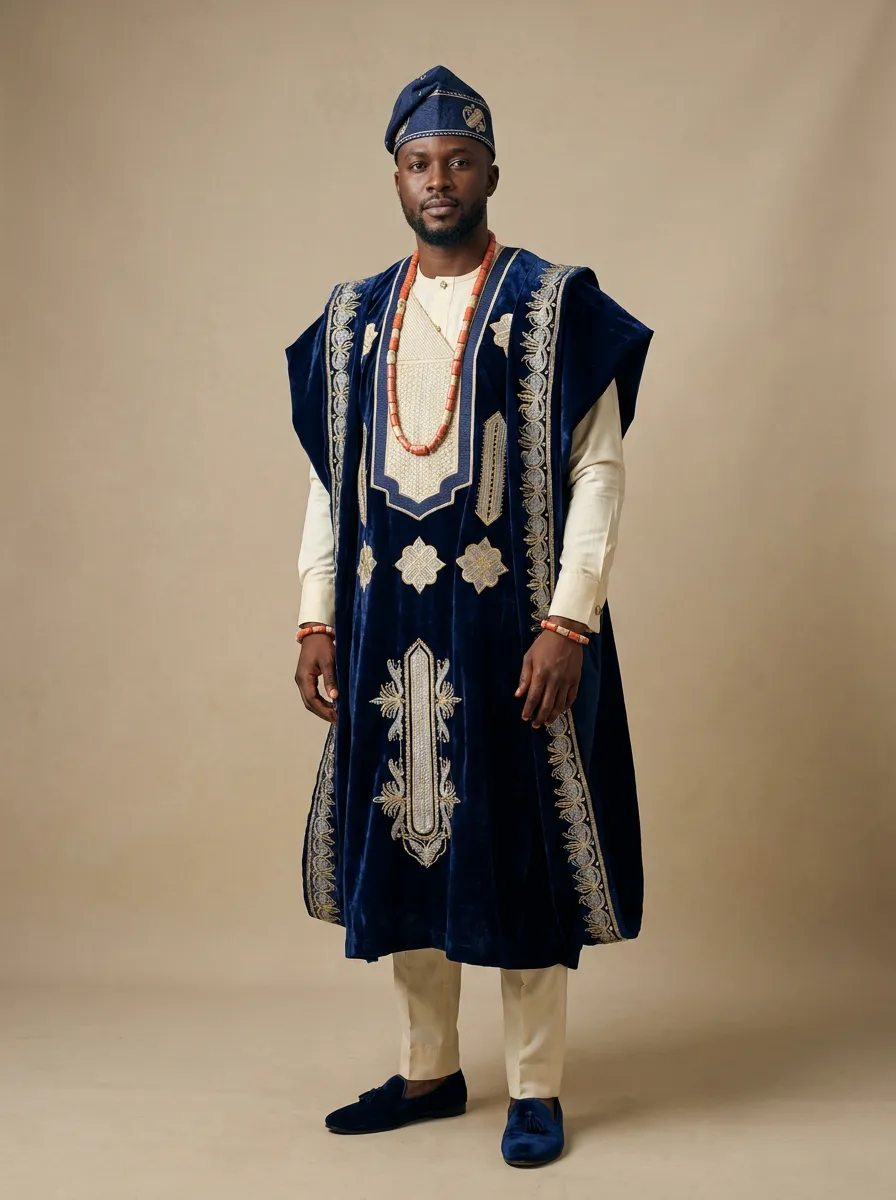
Above — Agbada for a traditional wedding, designed and rendered here
- garment styles
- 60
- crafts
- 31
- occasions
- 39
- motifs
- 27
- cloths
- 28
- regions
- 4
Why it is its own market
This market was switched on once holding absolutely nothing — no garment, no cloth, no craft, no occasion — and was switched back off, because an open empty market is worse than a closed one: an engine handed a garment it has no vocabulary for falls back on what it does know, which here was Indian.
Building “African” as one flat vocabulary would have repeated, at continental scale, the exact mistake this platform already made once when “ethnic” quietly meant “Indian”. So Africa is four regions under one market, seeded and switched on one at a time.
It stayed shut until all four held vocabulary of their own and a person had walked a brief through each one. That was finished on 25 September 2026, and it opened the same day.
Inside it
Its regions
A region exists here when it imposes something a garment must obey, or holds cloth and construction of its own — never one per country, and never a list of what a place is famous for.
- West Africa
- East Africa
- Southern Africa
- North Africa
The evidence
The words this market holds
A selection, quoted from the catalogue rather than written for this page. Each one is a row with its own note, its own pieces and its own cost — not a synonym pointing at something else. Take any of them and look it up.
Garments
23- agbadaWest — cut loose and flowing rather than fitted
- buba and sokotoWest
- iro and bubaWest
- kaba and slitWest
- grand boubouWest
- fuguWest — the strip-woven smock
- geleWest — part of the outfit, not an accessory added to it
- kangaEast — wrapped rather than cut
- gomesiEast
- kanzuEast
- habesha kemisEast — hand-spun white cotton with a woven border
- diracEast
- mushananaEast
- shweshwe dressSouthern — printed indigo cotton
- umbhacoSouthern
- basotho blanketSouthern — pinned or knotted, never left hanging loose
- herero dressSouthern
- isicholoSouthern
- djellabaNorth — the hood is part of the garment
- takchitaNorth — under-dress, open over-dress, and the wide belt that makes it a takchita rather than a caftan
- karakouNorth
- burnousNorth
- gandouraNorth
Crafts
10- aso-oke weavingWest — narrow strips joined edge to edge, the seam left visible
- kente weavingWest — the pattern is the structure of the weave itself
- adire onikoWest — tied with raffia before the indigo
- adire elekoWest — cassava paste painted on to resist the dye
- adire alabereWest — stitched in lines before dyeing
- bogolan dyeingWest — fermented mud painted onto cloth
- agbada embroideryWest
- fon appliqueWest
- zulu beadworkSouthern — flat blocks of solid colour, clean-edged, the placement read rather than looked at
- ndebele beadworkSouthern — stepped bands at a much larger scale, the geometry of the painted walls
Cloths
22- ankaraWest — the wax print
- aso-okeWest
- kenteWest — the weave; the named cloths are deliberately not seeded
- adireWest
- bogolanWest
- bazin richeWest
- georgeWest
- akweteWest
- kitengeEast
- kanga cottonEast
- shemmaEast — hand-spun highland cotton
- kikoiEast
- barkclothEast
- shweshweSouthern
- basotho woolSouthern
- emahiyaSouthern
- mansouriaNorth
- moroccan brocadeNorth
- assiut tulleNorth
- djellaba woolNorth
- beldi cottonNorth
- toub voileNorth
Occasions
8- owambethe Yoruba celebration party
- traditional weddingthe customary ceremony
- introduction ceremonythe formal meeting of two families
- naming ceremony
- akan funeral
- chieftaincy
- durbar
- church sunday
Quoted from prisma/africaWest.ts, prisma/africaEast.ts, prisma/africaSouthern.ts, prisma/africaNorth.ts.
The part nobody prints
What is deliberately not here
A page that only lists what it holds is a page nobody can check. Where a detail could not be verified it was left out, and a thin sentence is cheaper than an invented ritual.
Restricted kente cloths
Kente patterns are named, and some of them are royal or clan-specific in Ghana. Kente is seeded as the weave; the named cloths are not, and will not be invented.
Adinkra is a writing system, not free ornament
Each symbol carries a meaning, so it is held as a motif whose note says exactly that, and its placement is the stamped border it actually occupies rather than a scatter across a dress.
Aso-ebi is not a garment, so it has no garment row
One cloth chosen by a family and worn by everybody at the event is the most commercially significant practice in West African dress — and it is a styling party with a shared cloth, which is where it lives rather than in the wardrobe.
The other six, all open
Dressed for the occasion, in the words of the place.
Registration is closed while the last of the catalogue is finished. Ask for access and we will come back to you.