How it works
Four ways in. You need to know nothing about fashion.
You do not have to know what a gharara is, or how a nauvari is tied, or what zardozi costs. Pick whichever of these four sounds like you — they all end at the same place.
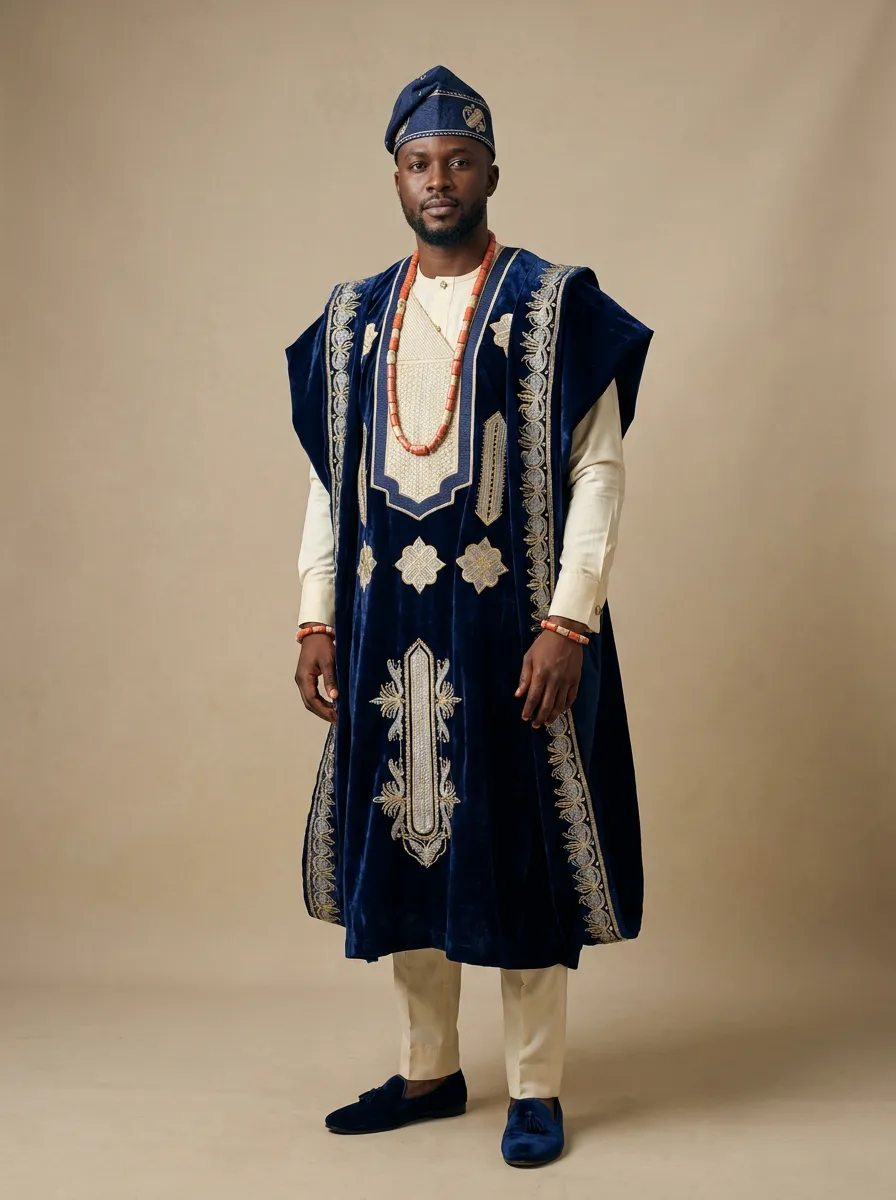
Agbada for a traditional wedding 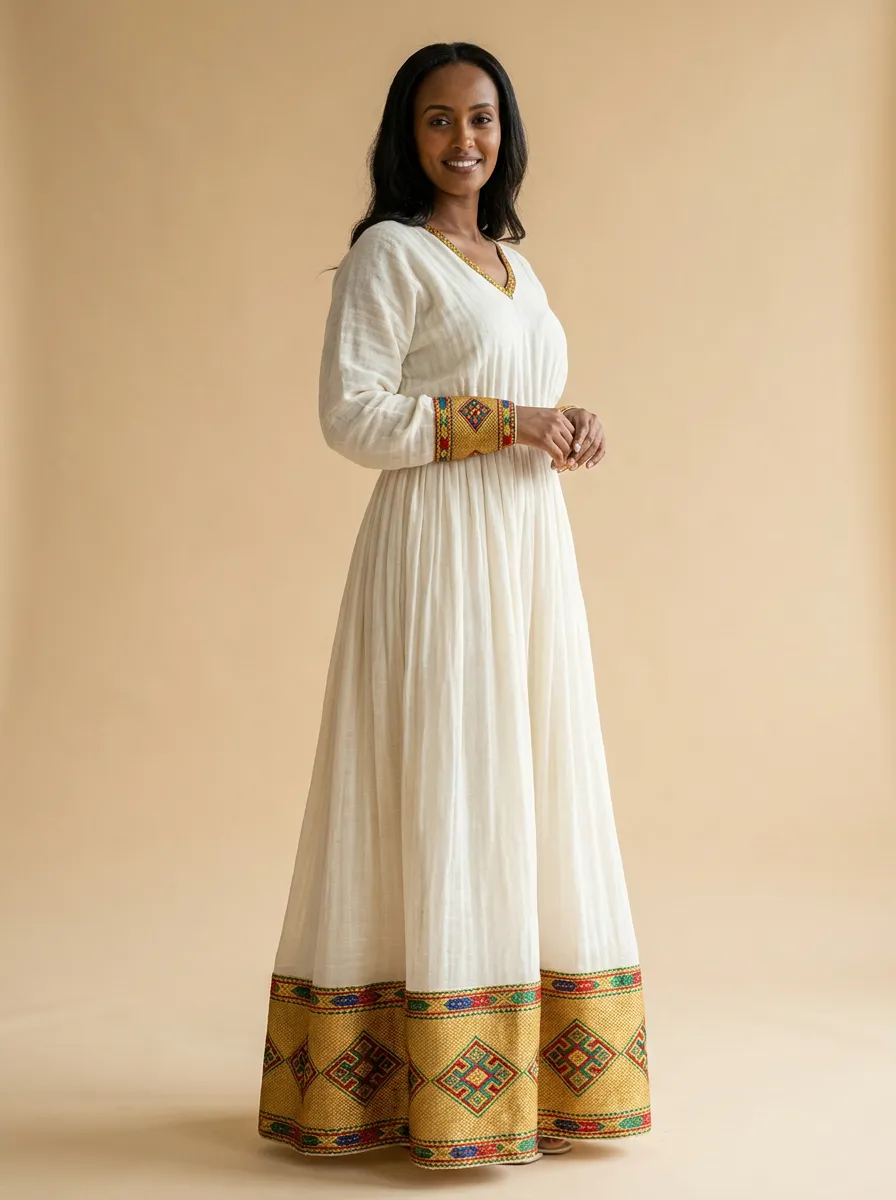
Habesha kemis, woven tibeb at the hem 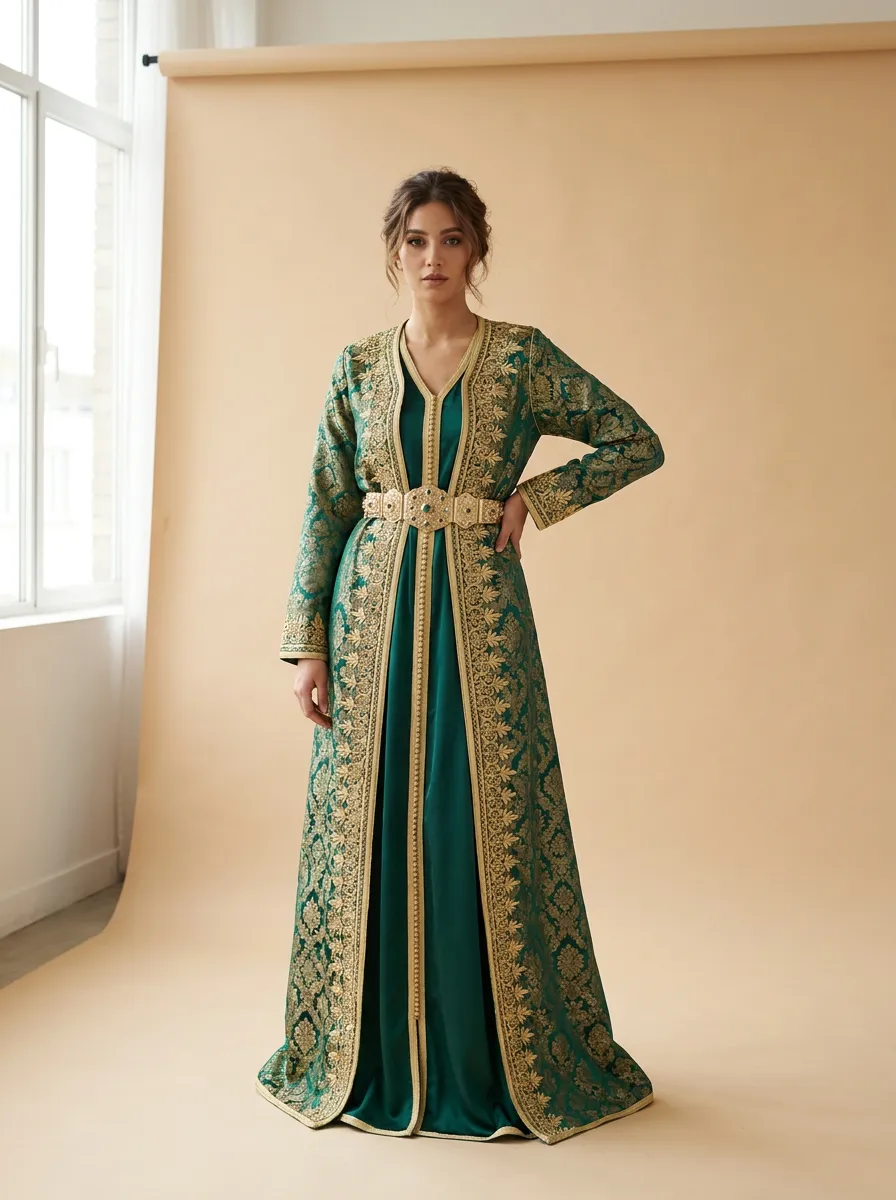
Takchita over its mdamma belt 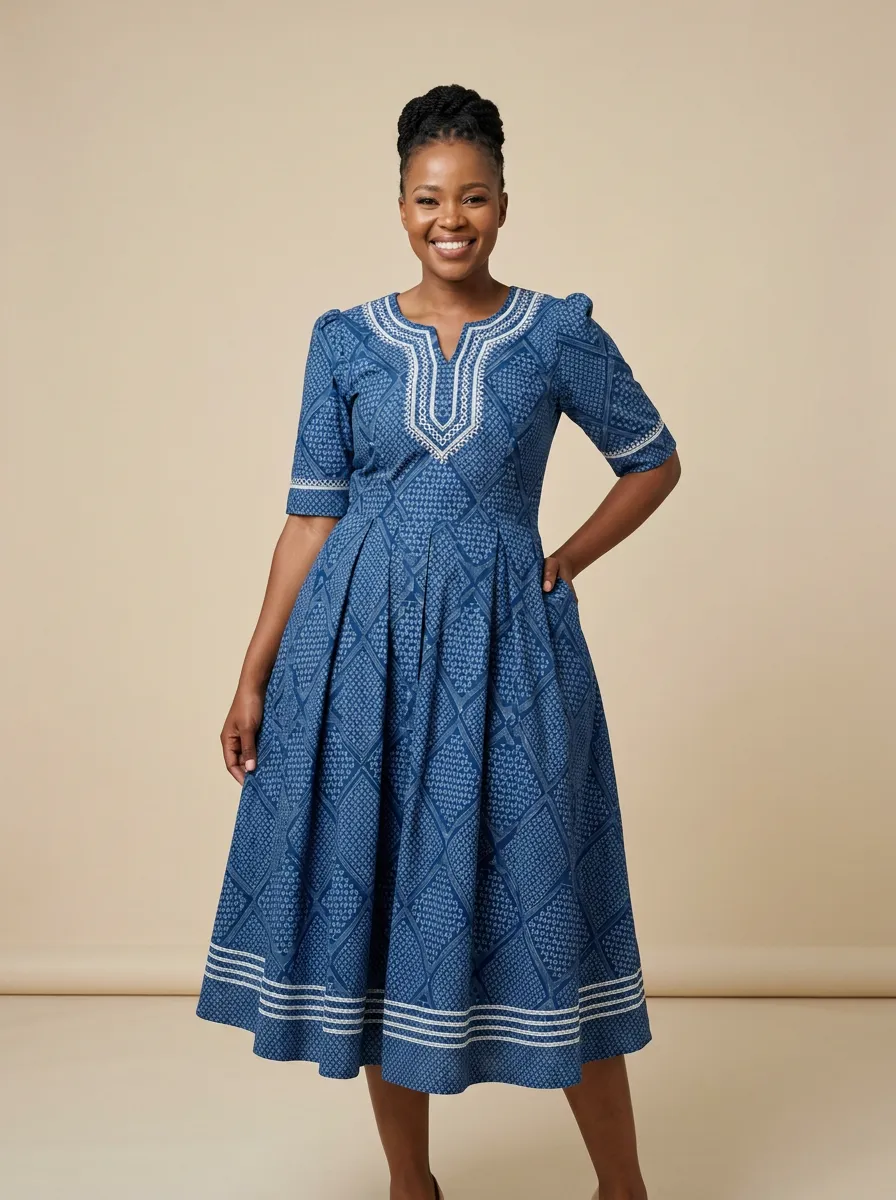
Shweshwe dress for a lobola
Real designs made on ZZEESS.
Look-a-like
Send a photograph of something you liked
A lehenga at a cousin’s wedding, a saree in a shop window, a picture you saved months ago. Upload it and we read the garment out of it — what it is, the cloth, the handwork, the cut, the colours on each piece.
- We show you what we read, in plain words
- Correct anything we got wrong — it is a list, not a guess you are stuck with
- Then have it made in your colour, your size and your budget
Occasion Styling
Dress a couple, or the whole family, for one occasion
One occasion, everybody who has to be dressed for it. The bride and the groom; the mother, the brother, the child. Designed together so they hold together in the same photograph.
- Each person gets a garment that suits them and the occasion
- Colours and crafts chosen across the group, not one at a time
- Add or drop a person and the rest are worked out again
Design Your Own
Change a garment piece by piece
For anyone who already knows what they want. Not one colour over a whole outfit — the choli, the ghagra and the dupatta each take their own cloth, their own colour and their own handwork.
- Pick the garment and it breaks into its real pieces
- Give each piece its own cloth, colour and craft
- See it change as you choose, and keep the versions you liked
Just answer a few questions
If you do not know any of the words
Most people do not, and it does not matter. Tell us the occasion and we ask a handful of short questions. Anything you have no opinion on, you skip — and we never ask a question that has no real answer for your occasion.
- No search box, no jargon, no scrolling a shelf
- Questions that do not apply are simply not asked
- “No preference” is an answer on every single one
Whichever way you come in, it goes like this
- 01
You say what it is for
A wedding in Gujarat. A mehndi. An office day. The occasion decides more than anything else — a wedding and a working day share almost nothing.
- The occasion, and where in the country it is being kept
- Who is dressing — and nothing is assumed from that
- Anything you already know you want: a colour, a craft, a cloth
- 02
We narrow it the way a tailor would
Not by filtering a shelf. A garba night means a chaniya choli in cotton with mirror work; a Tamil wedding means a koorai saree. The catalogue knows the difference and stops offering you the rest.
- Garments that belong to that occasion, not every garment we hold
- Crafts that belong to that region and that cloth
- Anything you do not have an opinion on, you can pass over
- 03
You see it before it exists
A full-length view of the garment as it would be made — the drape, the handwork where it actually sits, the colours on the pieces that carry them.
- The whole garment, head to hem
- Handwork shown where it belongs on that piece
- Change a colour, a cloth or a craft and look again
- 04
It is made by someone who makes it
Sent to a house or a karigar who works in that craft, with what it should cost said before anybody starts.
- Matched to makers by craft and region, not by who paid to be listed
- A cost range up front, not after
- Made to your measurements
One occasion. Everybody in it.
Occasion Styling, seen from the outside: a family that reads as one party rather than four people who each shopped alone.
Habesha kemis, woven tibeb at the hem Takchita over its mdamma belt 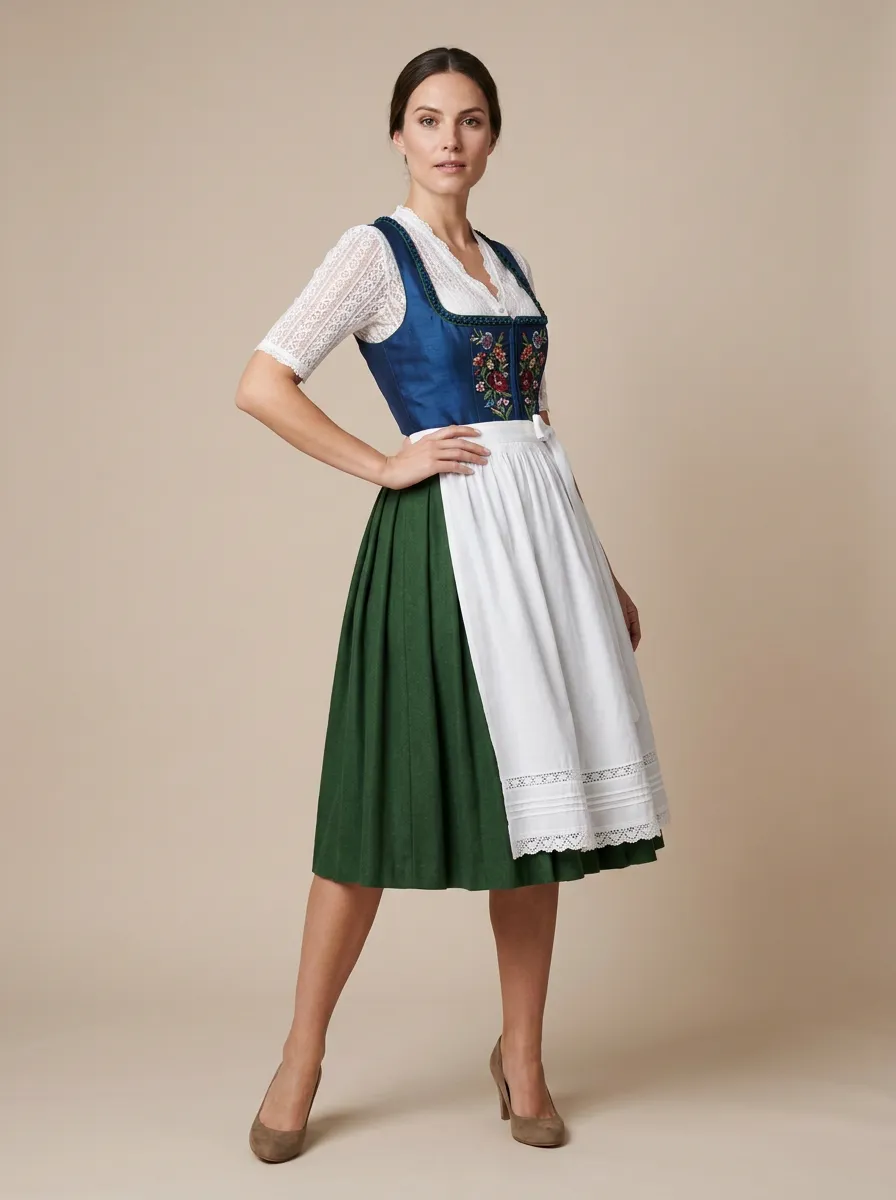
Dirndl — bodice, blouse, skirt and apron 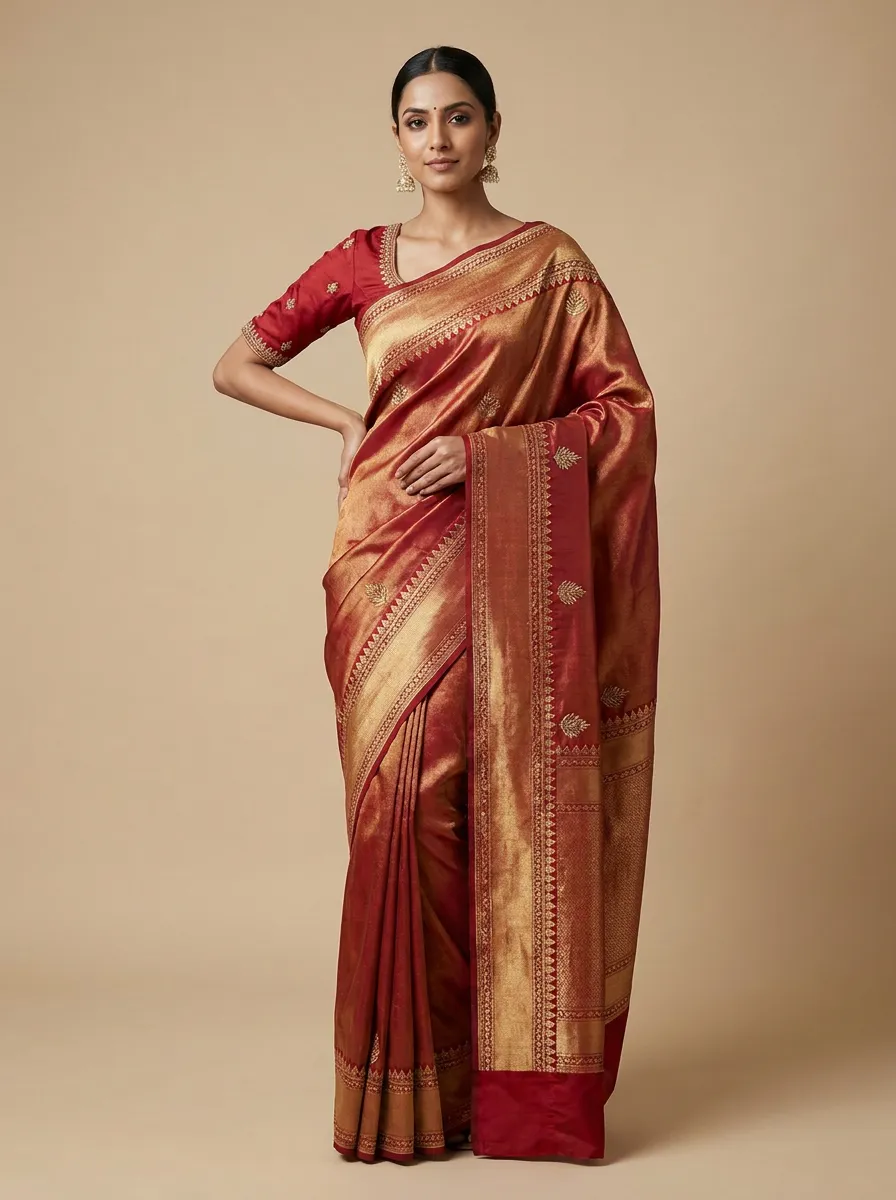
Saree for Durga Puja